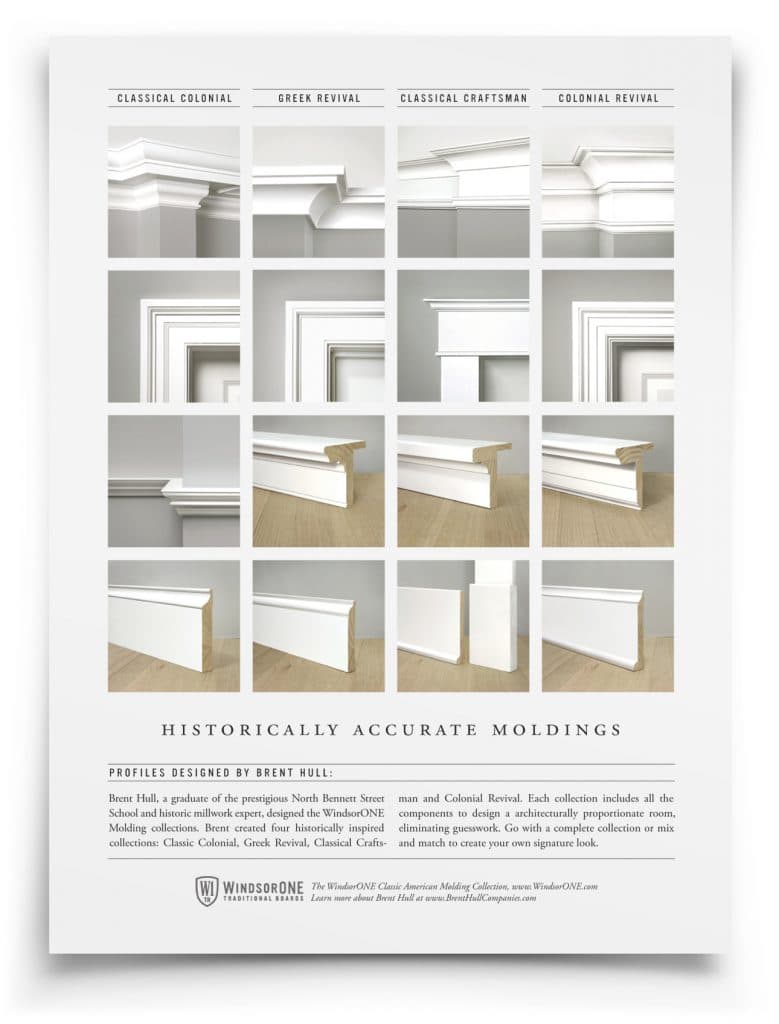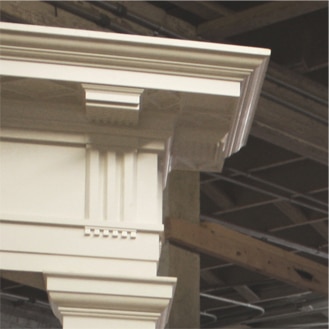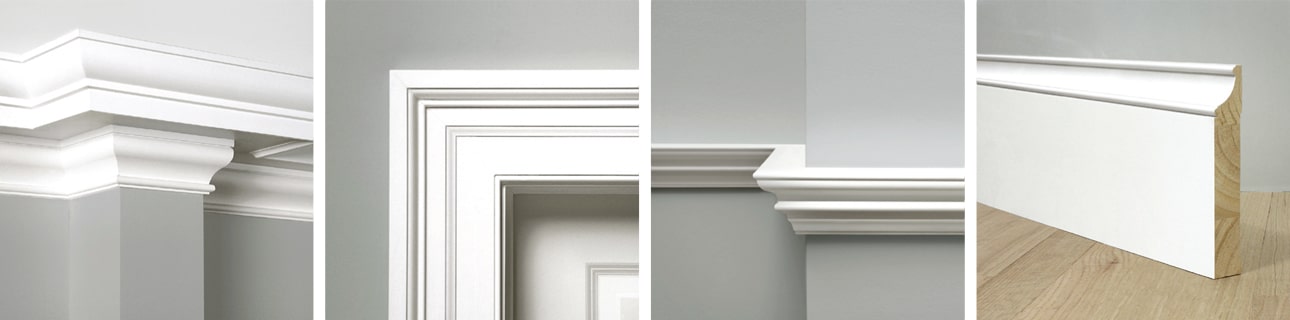
| Inspired by the democratic ideals of Greek culture and using the Parthenon as a model, architecture of this period reflected ideals of symmetry and balance. Increasing interest in decorative moldings resulted in subtle details being added to the home’s windows, doors, mantels and staircases in addition to traditional room moldings. |
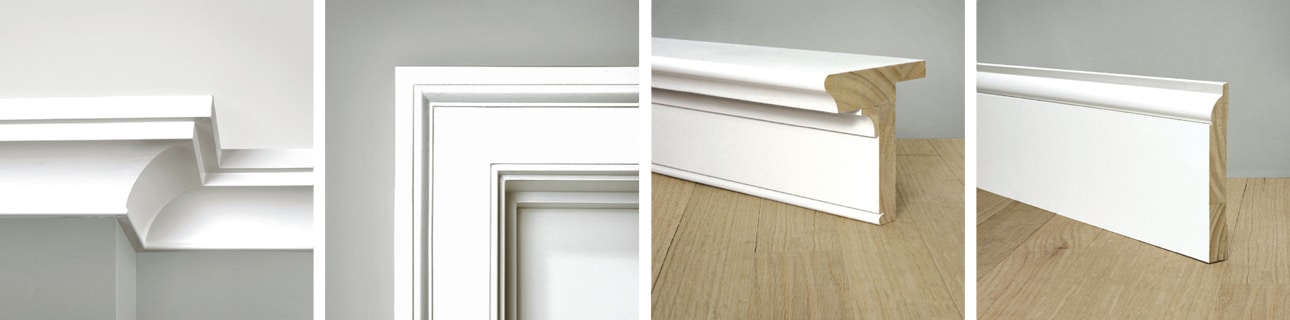
Crown Detail Taken from the Minard Lafever pattern book, this beautiful crown uses the elliptical radius and simple bead to create a wonderful effect. The shadow lines created by the ellipse in this pattern show well and speak of simple elegance. |
Base Molding This classically inspired base molding anchors the Greek Revival Style. The harmonious play of light on the oval and deep set quirk bring order and elegance to the entire piece. |
Window Stool This ogee-nosed stool harmonizes perfectly with the rest of the moldings. Its graceful detailing made it popular from the early 1800s into the 1930s. |
1X2 S4SSE This simple, square back band is seen in catalogs and pattern books from the 1820s through the 1870s.Band Molding Inspired by an Asher Benjamin pattern book of the 1830s, this elliptical band mold was used extensively in Greek Revival houses.Casing Also used on the window detail, the simple bead on this casing brings order and symmetry to the room. |
| Simple square lines with rounded edges, the moldings from the Classical Craftsman Style are thick and hearty. In a time when most moldings have shrunk in size and thickness, these moldings stand boldly. Reviving the craftsmanship from decades before, this offering emphasizes clean, simple design and detailed workmanship. |
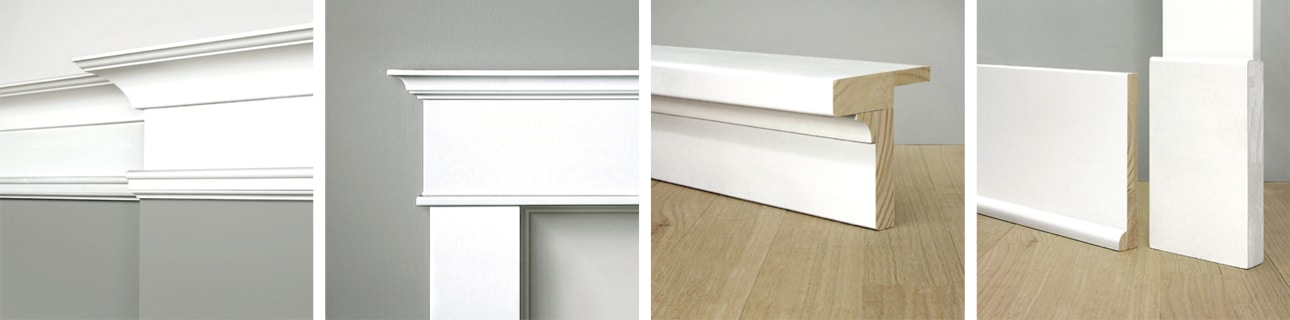
Crown This straightforward crown with an ogee top establishes the mood for this Style. The molding combines the simple styling of the Arts and Crafts movement with the classicism of the 1920sPicture Molding A great functioning piece of history. Not only was it used to hang pictures (plaster was too hard to nail into), but also by functioning as the architrave, it creates the feel of the classical entablature. |
Plinth The plinth block gets its name from classical architecture where the plinth supported the base of the column. This Classical Craftsman Style plinth is simple and substantial and works great in any roomBase Molding This base also carries the Arts and Crafts message. Extra tall by today’s standards, it works to ground the wall in an effortless fashion. Note how the shoe mold and the base together die perfectly into the edge of the plinth for a clean finish detail. |
Window Detail This stool and apron detail is an appropriate finish for any window. The thick stool is softened by the simple cove, which transitions to the apron. The result is a strong detail with handsome shadow lines and an honest feel. |
Header Detail The cove and ogee elements in this three-part Classical Craftsman Style header cap complement the other moldings in the room. The radius-stop piece at the bottom balances the build-up and feels like a mini-entablature, essential to the classical and clean feel of this Style. Note how the shadows splay across the large circular radius. |
| Taken from a turn of the century molding catalog, patterns of this Style use mostly 3/4" material tied together meticulously for a feeling of detailed grandeur perfect for today’s style of homes. Particularly notable in the collection is the picture molding, with a turn of the century crown treatment to create a classical symbol when placed a few inches beneath the crown. |
Casing This distinct casing communicates the classical feel of the traditional architrave in a scaled down, one-piece profile. The shapes collectively integrate with the Style, announcing the windows and doors. |
Crown This built-up crown detail is perfectly understated with classical detailing. The cove is broad and complemented with flanking stops that produce striking shadow lines from top to bottom. This detail gives a room an established strength. |
Base Molding This time-honored base is taller than today’s standard base. The seamless transition tells of a time long past and finishes this Style. |
Window Detail This distinctively American window stool and apron detail is archetypically pure. The ogee details complement each other and fit well with the other moldings from this Style. |
| The Classical Colonial Style captures the flair and flavor of the 18th century and is designed after the moldings in the historic William Gibbes House in Charleston, South Carolina, where the walls and rooms were symmetrical, balanced and perfectly proportioned. |
Built-Up Crown One of the primary considerations in the design of a molding is how light plays on the profile. This four piece crown build-up creates drama, wonderful shadows and is proportionally correct… something you won’t find in today’s molding racks. |
Base The thick profile of this molding serves as the Style's foundation. The bead detail on the cap is mimicked on the chair rail, casing, and crown details.Casing This casing was found in many of the period pattern books. The simple step-down detail with a prominent bead tells the story of a careful craftsman adorning his work-but not afraid to make a bold statement. |
Chair Rail The profile picks up the same bead detail found in various parts of this Style. The craftsman obviously was fond of his beading plane as the well-proportioned results attest. |
Casing This casing was found in many of the period pattern books. The simple step-down detail with a prominent bead tells the story of a careful craftsman adorning his work-but not afraid to make a bold statement. |
| Click on the items you wish to compare | Not all Styles contain the same elements. |
![]() |
![]() |
![]() |
![]() |
||||||||||||||||
|
|
|
|